
VIDEO CENTRAL MONITORING: MOVING FROM REACTIVE TO PROACTIVE SECURITY
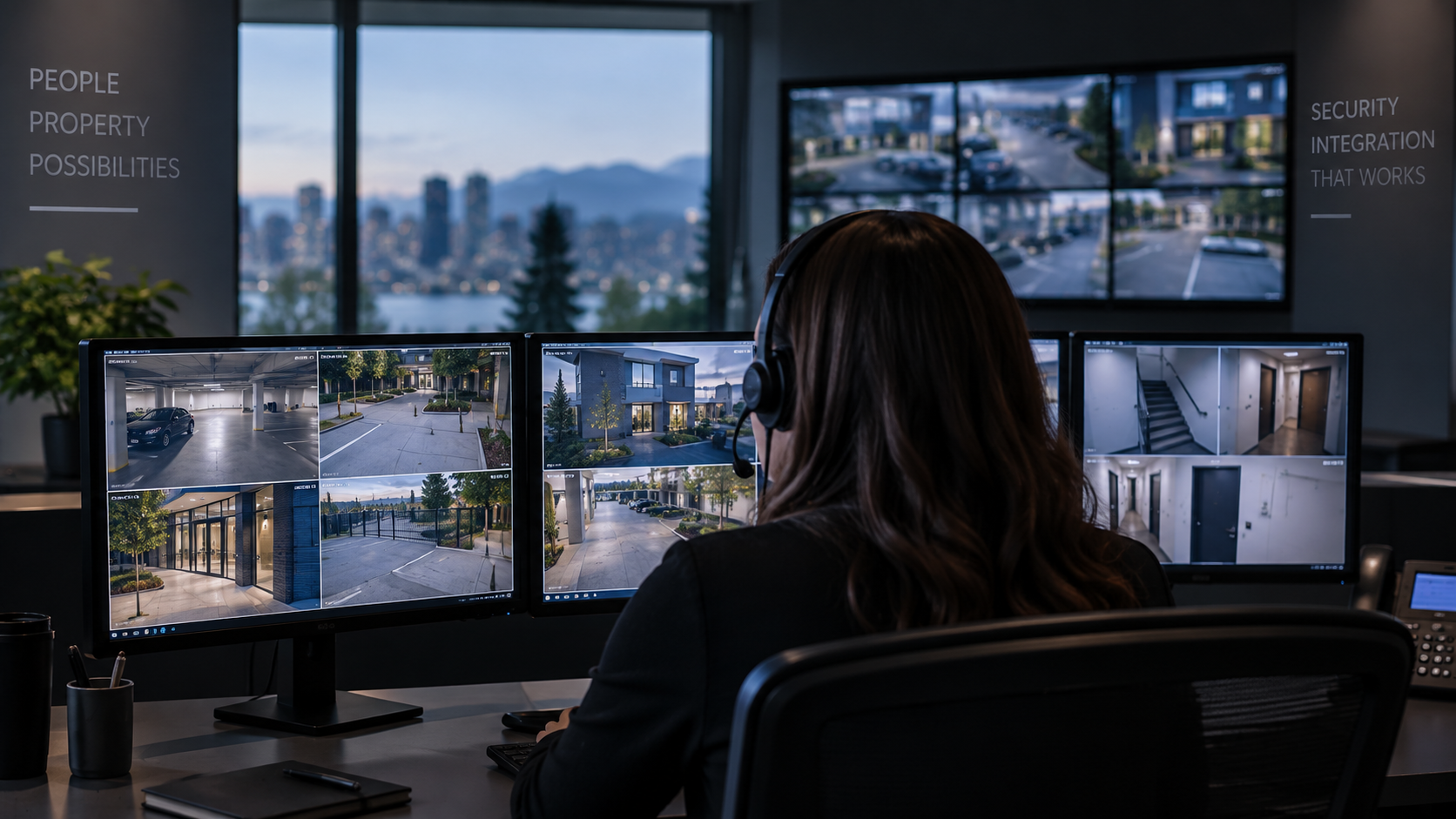
The Vision: MOVING FROM REACTIVE TO PROACTIVE SECURITY
For many properties, video surveillance has traditionally served one primary purpose: documenting what happened after an incident occurred. A break in, theft, vandalism or unauthorized access happens, and someone reviews the footage afterward to determine what took place.
Video central monitoring changes that approach.
Instead of waiting until the next morning to discover an incident, central monitoring adds a live response component to the video system. Cameras can be configured to detect people or vehicles entering designated areas during specific times. When an event occurs, the monitoring center receives an alert and an operator can view the camera feed to determine what is happening in real time.
For properties already equipped with cameras, this can also mean getting more value from an existing investment. Depending on the existing system, central monitoring solutions can often be integrated without replacing the entire camera system.
To take a closer look at how video central monitoring works and where it can make a difference, we sat down with Region 6 Director of Support and Training Casey Leadem, who brings extensive experience in cloud video surveillance, technical support and sales engineering.
The Challenge: CAMERAS CAN'T INTERVENE ON THEIR OWN
Traditional video surveillance is valuable, but by itself, it is often reactive.
A camera may capture someone entering a restricted area, loitering around a property, dumping materials illegally or attempting to gain unauthorized access. But unless someone is actively watching, the property may not know about the event until after it has occurred.
Casey points to the timing of an alert as one of the biggest differences between traditional intrusion detection and monitored video. A motion sensor alerts once someone has already entered an area. A glass break sensor activates when glass is broken. With properly configured video monitoring, a camera may identify a person before the situation reaches that point, creating an opportunity to intervene before an incident escalates.
The applications extend across multifamily and commercial environments. Multifamily properties may use monitoring around parking garages, package rooms, lobbies, exterior doors and other areas where unauthorized activity is a concern. Construction sites can use monitoring to help protect equipment and materials after hours, while equipment yards and industrial properties may focus on fence lines, gates, stored vehicles, materials and fuel.
Auto dealerships, retail centers, warehouses and vacant properties can also benefit from establishing specific areas and hours where activity should generate an alert. Rather than trying to watch every camera at all times, monitoring can be focused on the locations and activity that matter most to the property.
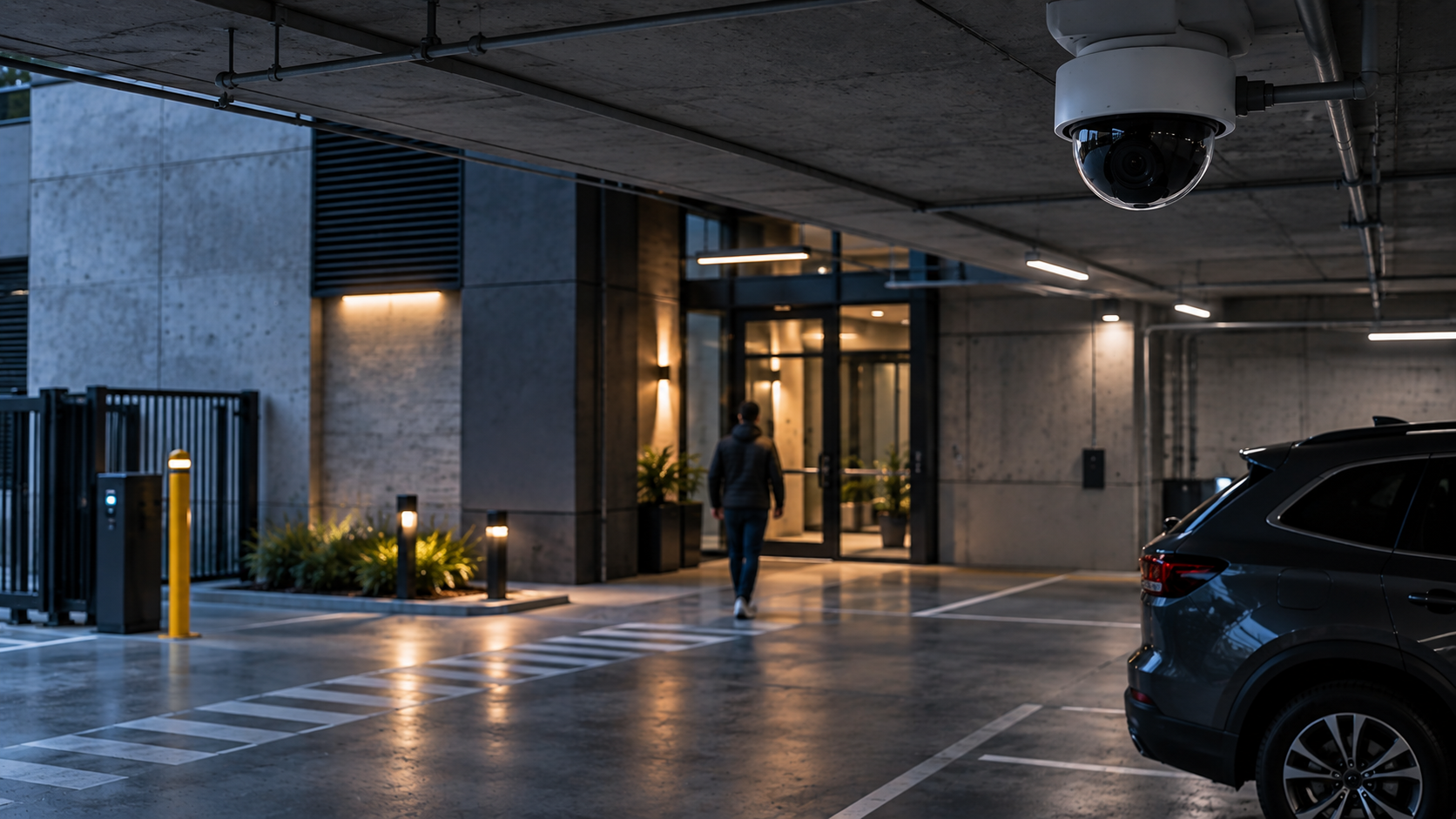
THE SOLUTION: INTELLIGENT VIDEO + LIVE MONITORING
Central monitoring does not mean someone has to sit and continuously watch every camera.
Instead, parameters can be established around when and where activity should generate an alert. For example, a property could establish that any person entering a designated area between 8:00 PM and 6:00 AM should trigger notification to the monitoring center.
Once notified, an operator can view the camera feed and determine the appropriate response. If the property is equipped with a loudspeaker, the operator may be able to use live audio to tell the individual they are in an unauthorized area and need to leave. If further escalation is necessary, the monitoring center can follow the property's established contact and dispatch procedures.
The process does not necessarily end when the immediate event is resolved. Depending on the monitoring setup, clients can also receive follow up documentation describing what occurred and what action was taken, creating a record that connects the video event with the response.
Another important advantage is flexibility. Clients do not necessarily need to replace their existing cameras to take advantage of central monitoring. Region 6 has solutions that can work with existing camera systems, as well as multiple monitoring options depending on the platform, property and security needs.
THE RESULT: FASTER AWARENESS. SMARTER RESPONSE.
The value of video central monitoring goes beyond capturing better evidence. It creates an opportunity to identify and respond to activity while it is happening, potentially preventing loitering, trespassing, theft or property damage from escalating.
For Casey, that shift from documenting an incident to potentially intervening while it is happening is where central monitoring becomes especially valuable. Instead of discovering an incident the following morning and reviewing footage after the fact, monitored video can help make the existing system more proactive. When an incident does occur, the video, timing of the event and monitoring response can also be documented together, creating a clearer record of what happened and the actions taken.
Real time verification is also becoming increasingly important as some jurisdictions move toward verified response requirements for certain intrusion alarms. Rather than dispatching law enforcement based solely on a traditional motion sensor, door contact or other alarm activation, these policies may require additional evidence that an incident is actually occurring before police response is initiated.
Video central monitoring can help bridge that gap. When an alert is received, a monitoring operator can visually verify activity through the camera system and provide information about what is occurring. Depending on the property, jurisdiction and established response procedures, that verification can support escalation to the appropriate contacts or law enforcement when necessary.
Seattle, for example, requires verified evidence for police response to ordinary burglary and intrusion alarms rather than dispatching solely from a sensor activation. Other jurisdictions throughout Washington and Oregon have also adopted verification or alarm confirmation procedures. Because requirements and response procedures vary by jurisdiction, property owners and managers should understand how local requirements affect their security and monitoring strategy.
The result is a video system that does more than document what happened. It can help property teams become aware of activity sooner, support intervention before an incident escalates and provide verified information when response is needed.
For properties experiencing recurring loitering, illegal dumping, theft or unauthorized access, central monitoring can transform existing cameras from a primarily investigative tool into an active part of the property's security strategy.
Meet the expert: Casey Leadem, Director of Support & training

To better understand video central monitoring and its practical applications, this article was developed with insight from Region 6 Director of Support and Training, Casey Leadem.
Casey brings extensive experience in cloud video surveillance, including eight years with Eagle Eye Networks, where his roles spanned technical support, support leadership, sales engineering and regional sales. His background gives him experience with video systems from multiple perspectives, including how solutions are designed, implemented, supported and ultimately used by clients.
At Region 6, Casey combines that experience with his focus on technical support and training, helping strengthen technical knowledge across the team and ensuring clients are getting the most from their systems.
When it comes to video central monitoring, Casey sees one of the biggest opportunities in helping clients use the cameras they already have more proactively. Instead of turning to video only after something has happened, central monitoring gives properties another way to put that technology to work while an event is unfolding.
As Casey puts it:
“It’s like having a virtual security guard, with eyes on your property when you need them.”
