
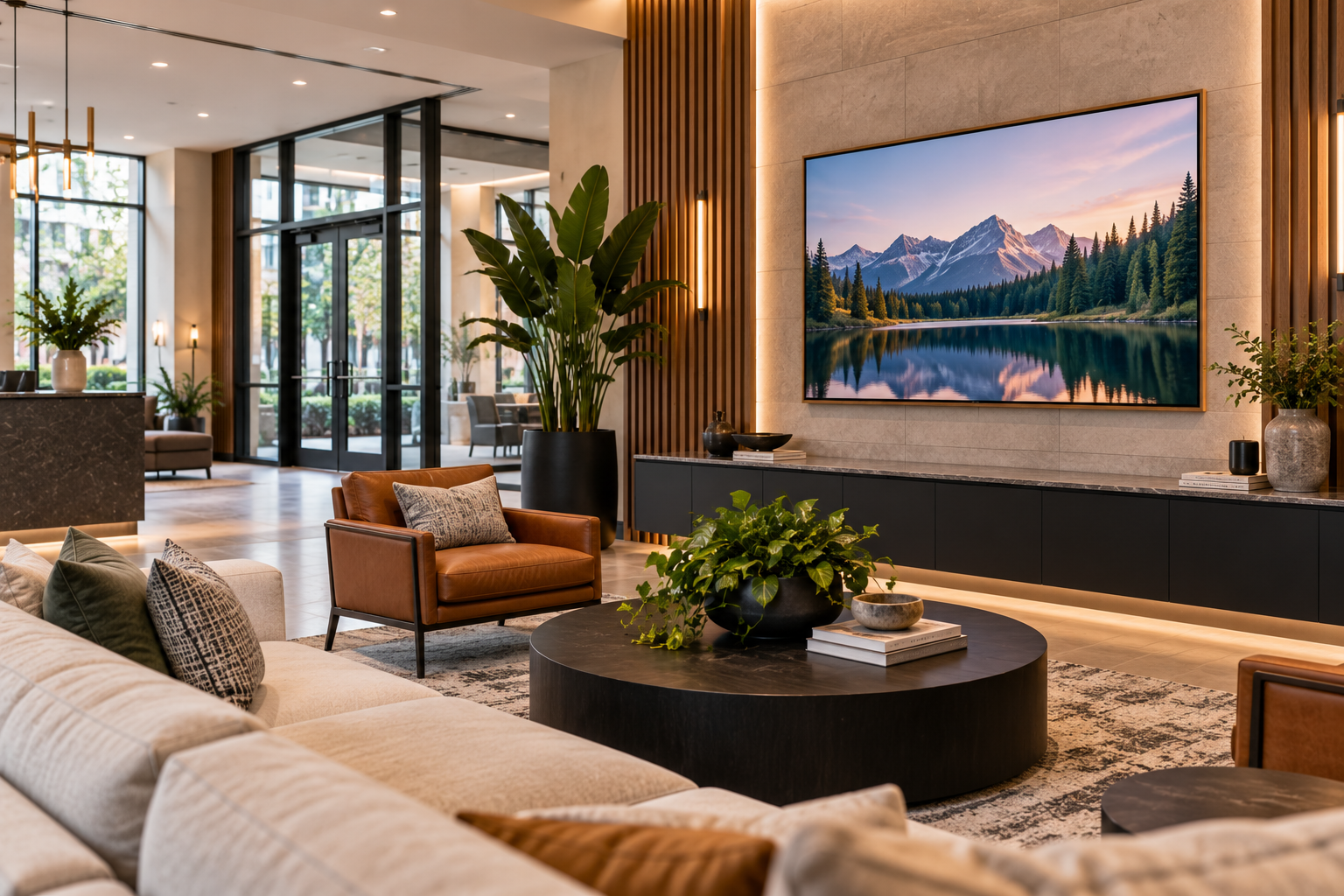
The Vision: CONNECTED SPACES. SIMPLER EXPERIENCES.
Audio video technology plays an important role in how people work, communicate, and interact with the spaces around them. From conference rooms and collaborative workspaces to resident lounges, rooftop amenities, and entertainment areas, expectations for technology continue to evolve.
People expect to connect their devices, share content, participate in virtual meetings, and control audio and video systems without unnecessary complications. Yet many buildings still rely on equipment that makes these everyday activities more difficult than they need to be.
Audio Video (AV) Modernization goes beyond installing larger displays or upgrading speakers. It involves evaluating existing systems, identifying opportunities for improvement, and making technology easier to use and manage.
To explore how these changes are shaping modern buildings, we spoke with Region 6 Senior Account Manager, Multifamily, Troy Costilla. With more than 30 years of experience in the low-voltage industry, Troy has witnessed the evolution of AV technology firsthand, from traditional analog audio systems to today's integrated, network-connected technology.
The Challenge: WHEN TECHNOLOGY NO LONGER MEETS EXPECTATIONS
A building may have a functioning AV system and still struggle to deliver the experience its occupants expect.
Whether someone is connecting a laptop for a presentation, joining a virtual meeting, or streaming content to a display, complicated controls and unreliable connections can make everyday activities unnecessarily difficult.
One common issue involves how people connect their devices to shared displays. Traditional wall-mounted televisions often leave cables and connections accessible behind the screen. When users unplug or adjust equipment to connect their own devices, they can unintentionally disrupt the system for the next person.
Challenges also arise when different areas of a building operate on separate systems, making audio and video equipment more difficult for property and facilities teams to manage.
The challenge is finding ways to improve functionality without unnecessarily replacing equipment that still works.
THE SOLUTION: MODERNIZATION WITHOUT STARTING OVER
According to Troy, evaluating an existing AV system involves several factors, including equipment age, compatibility, physical condition, security, and ease of use.
Existing speakers, amplifiers, cabling, and equipment racks can often remain in place while other components are upgraded. Rather than automatically recommending a complete overhaul, Region 6 looks for opportunities to improve functionality while preserving usable infrastructure.
Modernization can also happen in phases, allowing building owners and property managers to prioritize improvements based on their needs and budgets.
Centralized Control and Automation
Instead of managing separate systems throughout a property, centralized controls can allow building teams to manage audio and video across multiple areas.
For example, background music can be scheduled to begin automatically in lobbies and shared spaces each morning and shut off in the evening. Properties can also establish approved playlists across multiple locations, creating a consistent experience without requiring staff to manually manage equipment throughout the day.
Making Technology Easier to Use
Wireless casting, Bluetooth connectivity, and accessible HDMI ports allow users to connect their devices without disturbing existing equipment.
Troy also points to flush-mounted frame-style televisions as an increasingly popular solution. These displays can reduce access to cables and connections behind the screen while maintaining a clean appearance.
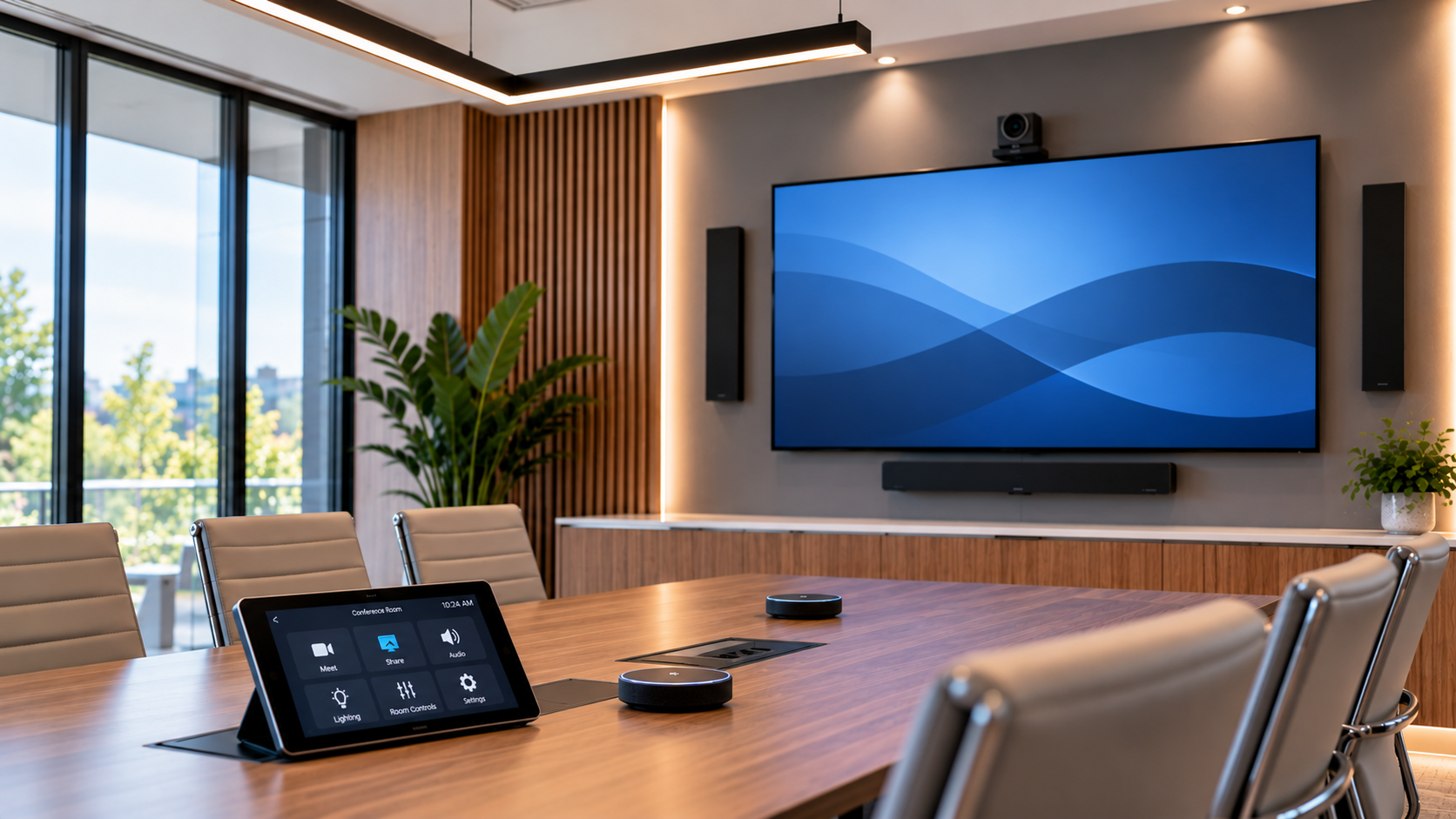
Integrated conferencing systems can combine displays, cameras, microphones, and audio equipment with simplified controls, making meetings and presentations easier to manage.
Supporting Modern Collaboration Spaces
The growing demand for flexible workspaces is also influencing AV modernization.
Conference rooms, training spaces, and coworking areas increasingly rely on video conferencing, wireless presentations, and integrated audio systems. Troy is seeing similar technology introduced into existing amenity spaces as properties adapt to changing expectations.
Modern AV solutions can incorporate displays, wireless content sharing, cameras, microphones, and soundbars to support virtual meetings and presentations.
Whether supporting a team meeting, a client presentation, or someone working remotely, technology should make collaboration easier rather than becoming an obstacle.
THE RESULT: BETTER FUNCTIONALITY. GREATER FLEXIBILITY.
Successful AV modernization should be noticeable in how a space functions, not in how much new equipment has been installed.
Meetings can begin without delays caused by complicated connections. Shared displays become easier to access without disrupting existing equipment. Background audio and other systems can operate on established schedules, reducing the need for daily adjustments by building staff.
For owners and property managers, these improvements can mean fewer interruptions, simpler system management, and spaces that better accommodate the people using them.
Looking ahead, Troy is seeing growing interest in video walls and large-format displays as alternatives to traditional projection systems. As these and other technologies evolve, he emphasizes the importance of planning for future changes.
His recommendation is to prioritize infrastructure flexibility over specific hardware.
Displays, control panels, and other equipment will continue to change, but properly planned cabling, accessible equipment pathways, and centralized infrastructure can make future upgrades easier and less disruptive.
By considering both current needs and future possibilities, building owners can make informed investments that improve functionality today while allowing their AV systems to adapt over time.
Meet the expert: Troy Costilla, Senior Account Manager, Multifamily

With more than 30 years of experience in the low-voltage industry, Troy Costilla brings extensive technical knowledge and hands-on experience to Region 6's Audio Video solutions.
Beginning his career with traditional analog audio and home theater systems, Troy has worked through decades of technological advancements, expanding his expertise into commercial AV integration, digital audio, advanced display technologies, video conferencing, centralized controls, and system engineering.
His background spans installation, troubleshooting, system design, technical sales, and client consultation, giving him a comprehensive understanding of both the technology and the people who use it.
At Region 6, Troy works with clients to evaluate existing systems, identify modernization opportunities, and develop practical solutions that balance functionality, reliability, and budget considerations.
